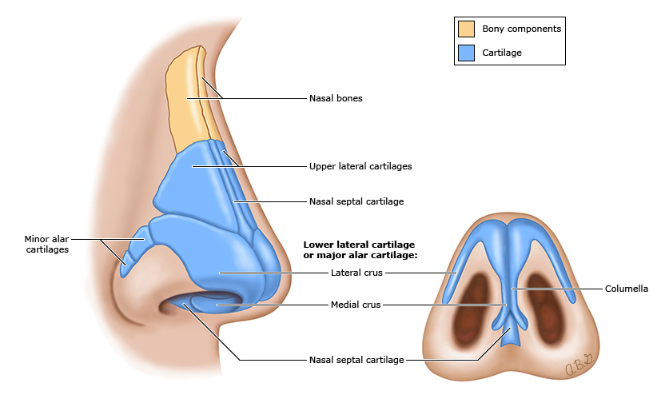
The internal anatomy of the nose includes the following important structures:
●The nasal septum is the midline structure, dividing the nose into two nostrils and is composed of membranous, cartilaginous, and bony components (figure 1).
●The lateral nasal wall consists of the superior, middle, and inferior turbinates, which are erectile structures composed of mucosa and spongy bone, covered with mucous membrane (figure 2 and figure 3). The turbinates warm, humidify, and filter inspired air before its passage to the lungs. These structures swell or contract with changes in temperature, humidity, allergen exposure, and emotional perturbations. There is also a regular, cyclical pattern of turbinate swelling, which alternates between sides at intervals of two to five hours [1]. This is sometimes referred to as the nasal cycle.
●The internal nasal valve consists of the junction between the upper lateral cartilage and septum, while the external nasal valve includes the lower lateral cartilages (alar cartilages), columella, and nasal vestibule (figure 4).